USIU-Africa
Off Thika Road, Kasarani, Nairobi
Available now — order before 3:00pm for same-day Nairobi delivery.
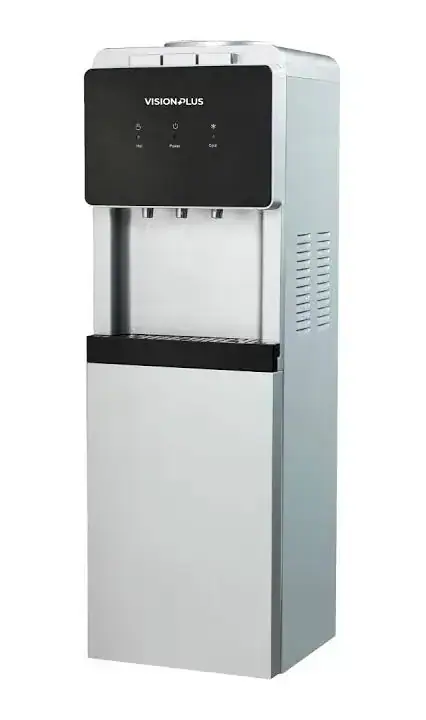
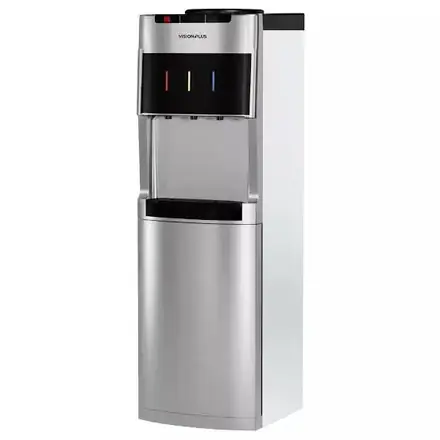
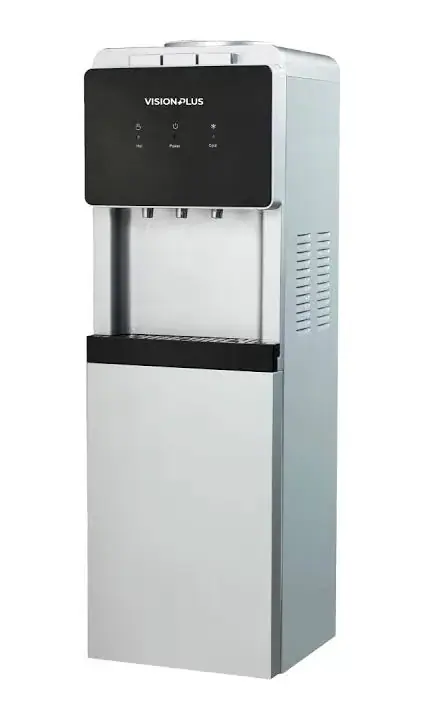
Buy the genuine Vision Plus VPWD2HC Hot, Normal and Cold water dispenser in Kenya from Gadget Market. Hot, normal and cold top-loading water dispenser with child lock and…
Hand-wrapped, with a card in your words and an optional video-message QR. Prices hidden, delivered when you say.
Genuine Vision Plus | Hot, Normal & Cold Taps | Child Lock | Under-Storage Cabinet | 2-Year Warranty
The Vision Plus VPWD2HC is a top-loading hot, normal and cold water dispenser with a child lock on the hot tap and an under-storage cabinet for cups and mugs, in a silver and black body, per a Kenyan retailer listing and Vision Plus's own page for the closely related VPWD3HC. It is the all-rounder: hot water for tea, normal for drinking, and cold for hot afternoons. Available in Kenya from Gadget Market as a genuine, brand-new appliance, this page is for shoppers searching "Vision Plus VPWD2HC Kenya," "Vision Plus hot normal and cold water dispenser," "VPWD2HC water dispenser Kenya," "water dispenser price Kenya," or "water dispenser with cabinet Nairobi."
This page explains what the VPWD2HC offers, what the listings leave out or state inconsistently, how to place, use and clean a dispenser in a Kenyan home or office, how it compares with the hot-and-normal and super-cold models, and how to check your unit on delivery. Vision Plus's own page uses a slightly different model code, and we say so.
| Feature | Detail |
|---|---|
| Model | VPWD2HC |
| Type | Top-loading water dispenser with hot, normal and cold taps and a storage cabinet |
| Taps | Three taps for hot, normal and cold water, per a retailer listing and Vision Plus's page for the closely related VPWD3HC |
| Child lock | Child lock on the hot water tap, per Vision Plus's page and a retailer listing |
| Cabinet | Under-storage cabinet for cups and mugs, per Vision Plus's page |
| Bottle | Top-loading bottle, per a retailer listing. The bottle size is not stated, so we confirm it per unit |
| Cooling | Electric cooling, per a retailer listing and Vision Plus's page for the closely related VPWD3HC. We confirm the cooling type of your unit |
| Power | Not stated on Vision Plus's page. We confirm the wattage per unit |
| Hot water temperature | Not stated on Vision Plus's page or the retailer listing. We confirm it per unit |
| Dimensions and colour | Silver and black plastic body and a weight of about 12 kg, per one retailer listing. Dimensions are not stated, so we confirm them per unit |
| Warranty | 2 years covering parts and labour on Vision Plus's page for the related model. One retailer listing says 2 years in one place and 1 year in another, so we confirm the warranty that applies to the unit we sell |
| Condition | Brand new, genuine Vision Plus |
| Available from | Gadget Market, USIU-Africa, Nairobi |
Figures come from a Kenyan retailer listing of the VPWD2HC and Vision Plus's own page for the hot, normal and cold dispenser (listed there as VPWD3HC, with an image file named VPWD2HC). We found no Vision Plus page that uses the code VPWD2HC itself. Please ask our team to confirm the exact features, bottle size and warranty of the unit you order before you pay.
A new water dispenser normally ships with the dispenser, the user manual and the warranty documents. Water bottles are usually sold separately. We confirm exactly what is in the box for your unit when you order, and we check it with you at delivery.
A hot, normal and cold dispenser suits a household or an office where people want everything from tea to chilled water without a kettle or a fridge. Three taps keep the temperatures separate, a child lock on the hot tap protects small children, and the cabinet below stores cups and mugs. The listings describe electric cooling, which is quieter than a compressor, so it suits a living room or office where noise matters.
The listings leave out the bottle size, the power rating, the hot and cold water temperatures and the dimensions. They also disagree on the code and on the warranty: Vision Plus's own page lists the model as VPWD3HC with a 2-year parts-and-labour warranty, while a retailer listing of the VPWD2HC says 2 years in one place and 1 year in another. We do not guess these. We confirm them with you before you pay.
A bottled water dispenser holds a large bottle of drinking water. Gravity or a built-in pump feeds the water to the taps. On a hot, normal and cold model, one tap gives water at room temperature, one gives hot water from a small heated tank, and one gives chilled water from a cooling system. Because it holds water that has already been treated, a dispenser is only as clean as the bottle you put in and the way you look after it. Use bottled drinking water from a trusted supplier, and keep the dispenser clean.
Hot water from a dispenser can scald. The hot tank heats water to a high temperature, and the hot tap is the one to be careful with. Vision Plus's page lists a child lock on the hot tap to prevent accidental burns, which is a good feature in a home with small children. Keep the lock on, teach children not to touch the hot tap, and place the dispenser where a child cannot easily reach it. The page does not state the hot water temperature, so we do not quote one. We confirm it per unit.
Never run the hot tank empty. If the bottle runs out, water may not reach the heater, and the heater can overheat or trip. Replace the bottle as soon as it is empty, and switch off the hot switch when you leave the house for a long time.
A dispenser needs regular cleaning, because water that sits in the tank and taps can grow germs. Unplug the dispenser, remove the bottle and wipe the taps and the drip tray with a clean cloth and mild soap, then rinse. Every month or two, or as the manual says, flush the reservoir with a cleaning solution suitable for drinking-water equipment, and rinse thoroughly. If your water is hard, scale builds up in the hot tank, so descale as the manual advises. Do not use harsh chemicals unless the manual allows them. Clean the cabinet and keep cups stored upside down in it, so dust does not settle.
Vision Plus's page does not state the wattage, so we do not quote a running cost. A hot tank cycles on and off to keep water hot, and it uses most of its power heating the water, so turning off the hot switch when you do not need hot water saves electricity. For an example, not a Vision Plus rating: suppose a dispenser uses 0.5 kWh a day. That is about 15 kWh a month, from our calculation. Multiply by your own tariff to estimate the cost. The label on your unit gives the real rated figure, and we can confirm it for you.
Most homes and offices buy bottled water in large refillable bottles from a supplier who delivers. Choose a supplier you trust, check that the cap seal is intact, and note the date if the bottle has one. Keep spare bottles in a cool, shaded place off the floor. Because bottle neck sizes can differ, ask us to confirm that your usual bottles fit this dispenser. The page does not state the bottle size, so we confirm it before you pay.
Dispensers come in three common types. A hot and normal model, like this one, gives hot water and room-temperature water. It is the simplest and usually the cheapest to buy and run. A hot and cold model adds a cooling system, which gives chilled water, handy in hot weather, but it costs more, has a compressor or cooling chip that uses power, and needs more air space around it. A three-tap model gives hot, normal and cold water. If you mostly drink water at room temperature and want hot water for tea, a hot and normal model is enough. If your family likes chilled water, step up to a cooling model. We are happy to compare options with you at USIU-Africa.
A dispenser does not make water safe by itself. It holds and heats water that you put in. In Kenya, many households and offices use bottled drinking water delivered in large bottles. Choose a supplier that treats and seals its water, and ask how the bottles are cleaned. Keep the bottle neck and cap clean when you load it, and do not let the dispenser stand with an open bottle neck. If you refill bottles yourself from a tap, make sure the water is treated and the bottle is clean, because dirty bottles or untreated water can make people sick. Boiling does not remove every contaminant, so if you have doubts about your water, ask a qualified person to test it.
A dispenser with a cabinet suits an office tea corner. Put it near a socket and a sink, on a firm, level floor, away from a window with direct sun. Store a few mugs and cups in the cabinet, and keep tea bags, coffee, sugar and a small bin nearby. Put up a short notice reminding staff to switch off the hot switch at the end of the day and to report a leak. Agree on who changes the bottle, and keep a spare bottle on hand, so the dispenser does not run dry. Clean the drip tray daily, because spilled tea attracts ants and bad smells.
Different drinks like different water temperatures. Black tea is usually brewed with water near boiling, and green tea with water that has cooled a little. Because the page does not state the hot water temperature of this model, we cannot say how it compares with boiling, and we suggest you try it with your usual tea and see. If water from the tap is not hot enough for instant noodles or porridge, pour it onto the ingredients and cover the cup for a few minutes. Never pour hot water into a glass that is not heat-safe, and do not hold a cup under the tap with one hand while children are nearby.
Small children are curious about taps and lights. Even with a child lock, keep the dispenser out of easy reach, and teach children that the hot tap is not a toy. Do not leave the lock off after use. Keep the power cable tucked out of reach so it cannot be pulled, and do not place the dispenser at the edge of a table or counter. If a child is scalded, cool the burn under cool running water for several minutes, and seek medical help. These are general safety tips, and not a substitute for the manual.
Use the hot switch only when you need hot water. In an office, switch it off at the end of the day. At home, switch it off at night if nobody needs hot water. Keep the dispenser away from heat sources, so the hot tank does not work harder. Descale the hot tank when the manual advises, because scale makes heating less efficient. Unplug the dispenser when you go away for long.
Leaving the dispenser in direct sun. Sun warms the bottle and encourages algae. Never cleaning the taps. Germs collect there. Running the hot tank dry. It can damage the heater. Using the wrong bottle. A bottle that does not fit can leak. Placing the dispenser on a soft or uneven surface. It can tip over. Putting the dispenser where children can reach the hot tap. Keep the lock on.
Vision Plus's page lists an under-storage cabinet for cups and mugs. A cabinet under the taps turns the dispenser into a small station. Keep cups upside down on a clean tray so dust does not collect, put a small container of tea bags and sugar beside the dispenser rather than inside the cabinet if the cabinet is damp, and wipe the shelf weekly. The page does not give the cabinet size, so we confirm how many mugs fit. Do not store detergents or chemicals in the cabinet, and keep the door closed so that children cannot get into it.
Kitchen. Close to a socket and a sink, but not next to the cooker. Leave air space around it.
Living room. A corner away from the TV and sunlight, so that guests can help themselves to tea.
Office or reception. A staff corner or reception desk, with a notice about the hot switch.
Shop or salon. Behind the counter, out of the way of customers' children, with the lock on.
Waiting room or clinic. A place that staff can supervise, with cups and a bin close by.
If you move house or office, switch off and unplug the dispenser, drain the remaining water through the taps, and let it dry. Remove the bottle, and carry the dispenser upright with two people if it is large. Do not lay it on its side without checking the manual, because water inside the tank can run into the electrical parts. Keep the box, if you can, until the warranty period ends. After a move, let the dispenser stand upright for a while before you switch it on.
A dispenser can cool water in two common ways. Electronic cooling uses a small thermoelectric chip. It is quiet and light, but it cools gently and works best when the room is not too hot. Compressor cooling uses a refrigeration compressor, like a small fridge. It chills water faster and further, which suits hot weather and heavy use, but it uses more power and makes a faint hum when it runs. Which one a model has matters if you want ice-cold water in a warm room, so we confirm the cooling type of your unit.
Keep cooling dispensers away from heat sources, give them air space at the back and sides, and keep them level. Cooling units can form water drops on the outside or in the drip tray, which is normal condensation, so wipe it dry. If you move the dispenser, let it stand upright for a few hours before you switch it on, as the manual advises, so that a compressor can settle. Switch off the cold switch if you do not need chilled water, to save power. Never put food or bottles in the cooling area unless the manual says it is a storage area.
No water from the taps: check that the bottle is seated and not empty, and that air is not trapped. Press the tap for a few seconds.
Hot water is not hot: check the hot switch, the power and whether the indicator light is on. Wait for it to heat.
Water has a smell or taste: replace the bottle, clean the taps and the reservoir, and use bottled water from a trusted supplier.
The dispenser leaks: check the bottle seal and the drip tray, and switch off and call us if it continues.
The dispenser trips the power: unplug it, check the socket and cable, and avoid sharing a socket with other heaters.
The cabinet door will not close: check that nothing is blocking it.
VPWD2HC vs VPWD2HN. The VPWD2HN gives hot and normal water only. Choose the 2HC if you want chilled water.
VPWD2HC vs VPWD3SC. The VPWD3SC is a hot, normal and super-cold model with compressor cooling, per Vision Plus's page. It chills harder, at a higher price.
VPWD2HC vs an electric kettle and a fridge. A kettle and a fridge are cheaper, but you wait to boil and have to keep bottles in the fridge. A dispenser provides both on tap.
VPWD2HC vs a flask. A flask holds hot water for a few hours. A dispenser provides hot and cold water all day.
Homes and offices that want hot, normal and cold water.
Families with small children, where the child lock helps.
Small shops and salons that serve tea and cold water.
Anyone who wants chilled water without keeping bottles in a fridge.
An office in Westlands. Hot water for tea, cold water for the afternoon, and a cabinet for the staff mugs.
A family in Kitengela. Chilled water for school bottles and hot water for tea, with the child lock on.
A reception area. A dispenser for visitors, with cups in the cabinet and a notice about the hot tap.
The listings of this model are inconsistent on the code and the warranty. Before you pay, ask us to confirm the model code, the cooling type, the bottle size, the power rating, the temperatures and the warranty. We answer these before payment, so there are no surprises on delivery. If you can, visit us at USIU-Africa and see the dispenser, because the cabinet, the taps and the lock are things you can judge by looking. Measure the space and the door it must pass through, and bring the numbers.
Genuine, brand-new stock from a Nairobi shop you can visit. Gadget Market is at USIU-Africa, off Thika Road, Kasarani, Nairobi. We are open Monday to Friday 9:00am to 7:00pm, and Sunday 11:00am to 4:00pm (Saturday closed).
Is it VPWD2HC or VPWD3HC? A retailer listing calls it VPWD2HC, and Vision Plus's own page lists the related model as VPWD3HC. We confirm the code on your unit.
Does it have a child lock? Yes, on the hot tap, per Vision Plus's page and a retailer listing.
How is the water cooled? Listings say electric cooling. We confirm it per unit.
What warranty does it have? Vision Plus's page lists 2 years for the related model, and one retailer listing is inconsistent. We confirm the warranty that applies to the unit we sell.
Can I pay via M-Pesa? Yes, M-Pesa is accepted.
Do you deliver outside Nairobi? Yes. Outside Nairobi we deliver by courier, typically 1 to 3 business days after dispatch. The delivery charge depends on your location and the size of the item and is confirmed before you pay.
What warranty does it have? Vision Plus's page for the related model lists 2 years covering parts and labour, and one retailer listing is inconsistent (2 years and 1 year). Ask our Customer Relations team on 0798 217 756 for the warranty that applies to the unit you order.
Available now at Gadget Market. Call or WhatsApp our sales team on 0798 217 756 (WhatsApp) to confirm stock, delivery and what is included, or email info@gadgetmarket.co.ke. Visit us at USIU-Africa, off Thika Road, Kasarani, Nairobi.
Nairobi: same-day delivery for orders confirmed before 3:00pm on a working day. Rest of Kenya: courier to your door or nearest agent, typically 1–3 business days. You can also collect for free from our shop at USIU-Africa, Off Thika Road, Kasarani, Nairobi.
Faulty or not as described? Tell us within 7 days for a replacement or full refund. Changed your mind? Sealed, unused items can come back within 14 days. See our returns & warranty policy.